
Anúncios
With the rollout of 5G networks worldwide, many smartphone users are eager to experience faster speeds and lower latency. However, unlocking this technology often requires the right app to activate and optimize your 5G connection effectively.

The emergence of 5G technology represents a monumental shift in how we connect, communicate, and consume digital content. While many modern smartphones come equipped with 5G capabilities, the journey from having compatible hardware to actually leveraging the full potential of this next-generation network isn’t always straightforward. Many users discover that simply owning a 5G-enabled device doesn’t automatically guarantee optimal performance.
Anúncios
This is where specialized applications come into play, offering users the ability to activate, configure, and maximize their 5G experience. These apps serve as bridges between your device’s hardware capabilities and the network infrastructure, ensuring you’re getting the speeds and reliability that 5G promises. Understanding which apps work best and how to use them can transform your mobile experience entirely.
📱 Understanding 5G Technology and Why You Need an App
Fifth-generation wireless technology isn’t just an incremental upgrade—it’s a complete reimagining of mobile connectivity. With theoretical speeds reaching up to 20 Gbps and latency as low as 1 millisecond, 5G opens doors to applications previously impossible on mobile networks. From seamless 4K video streaming to real-time cloud gaming and augmented reality experiences, the possibilities are expansive.
Anúncios
However, 5G networks operate on different frequency bands than their predecessors. These include low-band (sub-1 GHz), mid-band (1-6 GHz), and high-band or mmWave (24-100 GHz) spectrum. Each band offers different trade-offs between coverage, speed, and penetration. Your smartphone needs to be properly configured to switch between these bands intelligently based on availability and signal strength.
Many carrier-provided settings don’t automatically optimize these transitions, which is where dedicated apps become invaluable. These applications can force your device to prioritize 5G connections, monitor signal strength across different bands, and provide diagnostic information that helps you understand your network performance in real-time.
🔧 Top Features to Look for in a 5G Activation App
When searching for the right application to manage your 5G connection, certain features distinguish excellent apps from mediocre ones. The most effective tools offer comprehensive control over your network settings while maintaining an intuitive interface that doesn’t require technical expertise.
Network Mode Selection and Forcing
The ability to manually select or force your device into 5G mode is perhaps the most critical feature. Some phones default to LTE to conserve battery, even when 5G is available. A quality app lets you override these settings, ensuring your device always seeks out 5G networks when accessible. This feature is particularly useful in areas where 5G coverage is spotty or when your device keeps dropping to 4G unnecessarily.
Signal Strength Monitoring
Understanding your connection quality goes beyond just seeing bars on your screen. Advanced apps provide detailed metrics including RSRP (Reference Signal Received Power), RSRQ (Reference Signal Received Quality), SINR (Signal-to-Interference-plus-Noise Ratio), and band information. These technical indicators help you identify the best locations for 5G connectivity and troubleshoot connection issues.
Speed Testing and Performance Analytics
Integrated speed testing tools allow you to measure your actual download and upload speeds, compare them against expected performance, and track changes over time. The best apps include historical data visualization, helping you identify patterns in network performance throughout the day or in different locations.
Battery Impact Management
5G connectivity, particularly on mmWave bands, can significantly drain your battery. Quality apps include power management features that help balance performance with battery longevity, offering modes like “5G Auto” that intelligently switch between networks based on your usage patterns.


🌐 How Carrier Apps Enhance Your 5G Experience
Major telecommunications providers have developed their own applications specifically designed to help customers maximize their 5G subscriptions. These carrier-specific apps often provide advantages that third-party alternatives cannot match, including direct integration with network infrastructure and access to carrier-exclusive features.
The Vivo app, for instance, serves as a comprehensive hub for Brazilian customers seeking to activate and optimize their 5G connections. Beyond basic network management, it offers account oversight, data usage tracking, plan customization, and customer support—all within a single interface. This integrated approach eliminates the need to juggle multiple applications for different aspects of your mobile service.
Carrier apps typically receive regular updates aligned with network infrastructure improvements, ensuring compatibility with the latest 5G deployment phases. They also provide accurate coverage maps specific to your carrier’s network, helping you understand where you can expect the best 5G performance in your area.
⚡ Step-by-Step Guide to Activating 5G Through an App
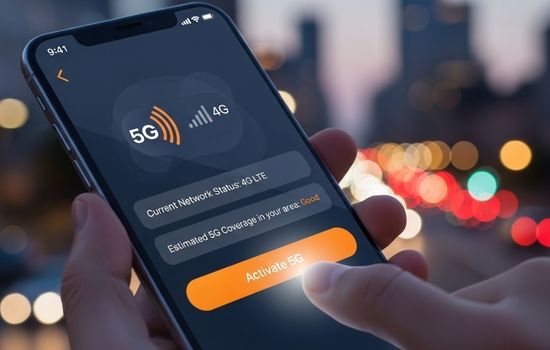
Activating your 5G connection through a specialized app is generally straightforward, though the exact process varies slightly depending on your device and carrier. Here’s a comprehensive walkthrough that applies to most situations.
Initial Setup and Download
Begin by downloading your carrier’s official app from either the Google Play Store or Apple App Store. Ensure you’re downloading the legitimate application by verifying the developer name matches your carrier. Once installed, open the app and log in using your account credentials—typically the same information you use to manage your billing online.
Verifying Device Compatibility
Before attempting to activate 5G, confirm your device actually supports it. Most carrier apps include a compatibility checker in their settings or help sections. This tool will scan your device’s hardware specifications and inform you whether 5G connectivity is possible. If your device isn’t compatible, the app will typically explain what requirements aren’t met.
Enabling 5G Network Mode
Navigate to the network settings section within the app. Look for options labeled “Network Mode,” “Preferred Network Type,” or similar terminology. Select the 5G option—this might be listed as “5G/LTE/3G/2G (Auto),” “5G On,” or “5G/LTE.” Some apps offer variations like “5G Auto” (switches between 5G and LTE based on availability) or “5G Only” (stays connected exclusively to 5G networks).
Configuring Advanced Settings
Explore additional settings that can enhance your experience. These might include data saver modes that work intelligently with 5G, notification preferences for when you connect to or disconnect from 5G networks, and bandwidth allocation settings for specific apps. Some advanced users may also want to configure APN (Access Point Name) settings, though this is typically unnecessary with modern carrier apps.
Testing Your Connection
After enabling 5G, run a speed test within the app to verify you’re actually connected to a 5G network and experiencing improved speeds. Compare your results to your previous LTE speeds. Remember that actual speeds vary based on network congestion, distance from towers, and whether you’re connected to sub-6GHz or mmWave 5G.
🛠️ Troubleshooting Common 5G Activation Issues
Even with the right app and a compatible device, you might encounter obstacles when trying to activate or maintain your 5G connection. Understanding common issues and their solutions can save you frustration and customer service calls.
5G Option Not Appearing in Settings
If you can’t find 5G options in your carrier app or phone settings, several factors might be responsible. First, verify your SIM card is 5G-compatible—older SIM cards may need replacement. Second, ensure your plan actually includes 5G access, as some basic plans may require upgrades. Third, check if your phone’s software is up to date, as carrier settings updates are often delivered through system updates.
Frequent Switching Between 5G and LTE
Constant network switching usually indicates you’re on the edge of 5G coverage. While annoying, this behavior is normal in areas with incomplete 5G deployment. You can mitigate this by setting your phone to “5G Auto” mode rather than “5G Only,” allowing smoother transitions. Alternatively, use your app’s coverage map to identify areas with stronger, more stable 5G signals.
Slower Speeds Than Expected
Not all 5G is created equal. If you’re experiencing speeds barely faster than LTE, you’re likely connected to low-band 5G, which prioritizes coverage over speed. Mid-band and mmWave 5G offer dramatically faster speeds but have more limited availability. Check your app’s network information to see which 5G band you’re connected to. Additionally, network congestion during peak hours can significantly impact speeds regardless of the technology.
Excessive Battery Drain
5G radios, particularly when searching for signals or connected to mmWave networks, consume more power than LTE. If battery life becomes problematic, consider using adaptive network modes that automatically switch to LTE when 5G isn’t necessary. Many apps include smart battery management that learns your usage patterns and optimizes network selection accordingly.
🌟 Maximizing Your 5G Performance Beyond Basic Activation
Once you’ve successfully activated 5G, optimizing your setup can unlock even better performance and user experience. These advanced strategies help you get the absolute most from your next-generation connection.
Understanding and Utilizing 5G Bands
Different 5G bands serve different purposes. Low-band 5G (n71, n5) offers wide coverage similar to LTE but with modest speed improvements. Mid-band 5G (n41, n77, n78) provides the best balance of speed and coverage, often delivering 300-500 Mbps. mmWave 5G (n260, n261) offers gigabit speeds but only works within short distances of towers and struggles with obstacles.
Advanced users can use their apps to identify which bands are available in their area and at what signal strength. This information helps you position yourself optimally—for example, knowing that moving near a window might capture mmWave signals that don’t penetrate deep into buildings.
Optimizing Apps for 5G Speeds
Many applications limit their quality settings based on assuming you’re on a metered, slower connection. With 5G activated, manually adjust streaming apps to their highest quality settings. Netflix, YouTube, and similar services can now stream 4K or even 8K content without buffering. Cloud gaming services like Xbox Cloud Gaming and GeForce NOW perform dramatically better on 5G, often providing experiences comparable to console gaming.
Leveraging 5G for Hotspot and Tethering
5G transforms your smartphone into a legitimate alternative to home broadband in many scenarios. When activated properly through your carrier app, your personal hotspot can provide multiple devices with high-speed internet. This is particularly valuable for remote work, travel, or as a backup internet solution. Monitor your data usage carefully, though, as 5G speeds can quickly consume data allowances.
🔐 Security and Privacy Considerations with 5G Apps
As with any application that manages critical device functions, security should be a priority when using 5G activation apps. Stick to official carrier applications or well-reviewed third-party options from established developers. Avoid apps requesting unnecessary permissions unrelated to network management.
Official carrier apps like those from Vivo, AT&T, Verizon, or T-Mobile undergo rigorous security testing and regularly receive updates addressing vulnerabilities. They also integrate with your carrier’s authentication systems, providing secure access to your account without storing sensitive credentials locally on your device.
Be cautious of apps promising to “unlock secret 5G speeds” or requiring unusual permissions like access to contacts, cameras, or storage. Legitimate network management apps only need permissions related to phone state, network access, and location (for coverage mapping). Any app requesting more should be viewed with suspicion.
🚀 The Future of 5G Management Apps
As 5G networks mature and coverage becomes more ubiquitous, the role of management apps will evolve. Early implementations focus primarily on activation and basic optimization, but future versions will likely incorporate artificial intelligence to predict and pre-configure optimal settings based on your location, time of day, and usage patterns.
We’re already seeing the emergence of features like network slicing, where 5G connections can be divided into virtual networks optimized for specific applications—ultra-low latency for gaming, high bandwidth for streaming, or massive connectivity for IoT devices. Future apps will give users control over these slices, allowing unprecedented customization of their network experience.
Integration with smart home ecosystems represents another frontier. Imagine your 5G management app automatically configuring your home network, switching your smart devices to your phone’s 5G hotspot during internet outages, or optimizing bandwidth allocation across all your connected devices based on real-time needs.
💡 Making the Smart Choice for Your 5G Journey
Selecting the right app to activate and manage your 5G connection ultimately depends on your specific needs, carrier, and technical comfort level. For most users, the official carrier app represents the safest, most reliable option, offering direct integration with network services and comprehensive support resources.
These applications remove the complexity from 5G activation while providing enough advanced features to satisfy power users. They’re regularly updated to reflect network improvements and new 5G deployment phases, ensuring you’re always leveraging the latest capabilities your carrier offers.
The transition to 5G represents more than just faster speeds—it’s a fundamental transformation in how we interact with digital services. Having the right tools to activate and optimize this connection ensures you’re not just participating in this technological revolution but truly benefiting from everything it offers. Whether you’re streaming high-definition content, engaging in real-time gaming, or simply browsing more efficiently, proper 5G activation through a quality app makes all the difference.
Take the time to explore your carrier’s official app, familiarize yourself with its features, and experiment with different settings to find what works best for your usage patterns. The investment of a few minutes in proper setup will reward you with months or years of superior mobile connectivity, making your 5G-capable device live up to its full potential.
