
Anúncios
# Photo Restoration Apps: Reviving Your Precious Memories with AI Technology
Old photographs hold irreplaceable memories, but time takes its toll through fading, scratches, and discoloration that threaten to erase our visual history forever.
Anúncios


Fortunately, modern technology has brought professional-level photo restoration capabilities directly to our smartphones. What once required expensive software and specialized training can now be accomplished with just a few taps on your mobile device. These innovative applications harness the power of artificial intelligence to breathe new life into damaged photographs, creating stunning results that preserve family heritage for future generations.
Whether you’ve discovered a box of vintage family portraits in the attic or want to digitally preserve deteriorating prints from decades past, photo restoration apps offer an accessible solution. The transformation these tools provide goes beyond simple filters—they intelligently reconstruct missing details, repair physical damage, and enhance image quality while maintaining the authentic character of the original photograph.
Anúncios
🔍 Understanding the Magic Behind Photo Restoration Technology
Modern photo restoration applications leverage sophisticated artificial intelligence algorithms that have been trained on millions of images. These neural networks understand how photographs degrade over time and can predict what missing or damaged portions should look like based on surrounding context.
The technology analyzes various aspects of your image simultaneously. It identifies areas affected by scratches, tears, stains, or fading, then intelligently fills in these damaged sections. Advanced colorization features can even add realistic color to black-and-white photographs, bringing historical images to vibrant life.
Machine learning models specifically trained for facial recognition help restore portraits with remarkable accuracy. The AI understands facial structure and can sharpen blurred features, repair damaged areas around eyes and mouths, and enhance overall facial clarity while preserving the subject’s unique characteristics.
✨ Key Features That Make Photo Restoration Apps Invaluable
The best photo restoration applications offer a comprehensive toolkit designed to address every type of photograph damage. Understanding these features helps you choose the right app and maximize your restoration results.
Automatic Damage Detection and Repair
Smart detection algorithms scan your uploaded image and automatically identify problem areas. Scratches, tears, spots, and creases are mapped and prioritized for repair. This automated approach saves considerable time compared to manual editing while delivering consistent results across multiple photos.
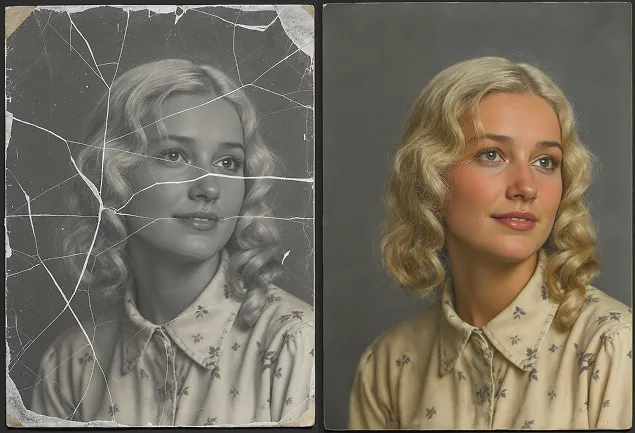
The repair process uses content-aware filling techniques that blend corrections seamlessly with surrounding pixels. Unlike simple cloning tools, AI-powered restoration understands texture, pattern, and lighting, creating natural-looking repairs that are virtually undetectable.
Color Enhancement and Colorization
Faded color photographs regain their original vibrancy through intelligent color correction algorithms. The technology analyzes the remaining color information and extrapolates what the original hues likely looked like, compensating for age-related degradation.
For black-and-white images, AI colorization has reached impressive levels of realism. The algorithms consider clothing styles, historical context, and natural color patterns to apply appropriate tones. While not always perfectly accurate to the original scene, results are remarkably convincing and breathe new life into vintage photographs.
Sharpness and Detail Enhancement
Blurry or soft photographs benefit from AI-powered sharpening that enhances edge definition without creating artificial-looking halos or grain. The technology distinguishes between intentional blur (like background bokeh) and undesirable softness, applying corrections selectively.
Detail enhancement algorithms can even reveal information that seems lost in shadow areas or blown-out highlights, recovering dynamic range and creating more balanced exposures from compromised originals.

📱 Getting Started: Your First Photo Restoration Project
Beginning your photo restoration journey is straightforward, even if you have minimal technical experience. The process follows intuitive steps that guide you from damaged original to polished restoration.
Start by digitizing your physical photographs if they aren’t already in digital format. Use a smartphone camera or flatbed scanner to create high-resolution digital copies. Better input quality yields superior restoration results, so ensure adequate lighting and focus when capturing images.
Once you’ve installed a photo restoration app, import your selected image. Most applications begin with an automatic analysis phase where AI examines the photograph and suggests corrections. Review these suggestions carefully—you’ll typically have options to accept all recommendations or customize individual adjustments.
The restoration process usually takes between 30 seconds to several minutes depending on image resolution and complexity. Most apps provide real-time previews so you can see transformations as they occur. This immediate feedback allows you to make informed decisions about additional adjustments.
Tips for Optimal Results
Working with the highest resolution possible gives AI algorithms more information to analyze. When scanning old prints, use at least 300 DPI to capture fine details that might be critical for accurate restoration.
For photographs with severe damage, consider breaking the restoration into multiple passes. Address major structural issues like tears and large stains first, then refine with color correction and detail enhancement in subsequent rounds.
Save multiple versions throughout your restoration process. Having a restoration history allows you to compare different approaches and revert if an adjustment doesn’t work as expected. Most quality apps include version management or history features specifically for this purpose.
🎨 Advanced Techniques for Professional-Quality Restorations
Once you’ve mastered basic restoration workflows, exploring advanced features unlocks even more impressive results. These techniques require patience but deliver transformations worthy of professional photo labs.
Manual Touch-Up and Precision Editing
While AI automation handles most restoration tasks admirably, some situations benefit from human intervention. Manual editing tools let you refine specific areas where automatic processes fell short or made incorrect assumptions.
Selective masking allows you to apply corrections to precisely defined regions. This proves invaluable when different photograph sections require different treatments—perhaps one area needs aggressive damage repair while another needs gentle enhancement.
Cloning and healing brushes supplement AI restoration for unique damage patterns the algorithm might not recognize. These tools let you manually sample undamaged areas and transfer that information to problem spots with natural blending.
Batch Processing for Photo Collections
When facing large collections of family photographs requiring similar corrections, batch processing features save enormous time. Define your restoration parameters once, then apply them across dozens or hundreds of images simultaneously.
Smart batch tools analyze each image individually while applying your specified correction types, adjusting intensity based on each photo’s specific condition. This balanced approach maintains consistency across collections while respecting individual image characteristics.
💾 Preserving Your Restored Memories for Future Generations
Completing restoration is only half the preservation equation. Proper storage and sharing ensure your renewed photographs remain accessible and protected for decades to come.
Export your restored images in lossless formats like PNG or TIFF for archival purposes. While these files are larger than compressed JPEGs, they preserve every detail without quality degradation, essential for images you may want to reprint or edit further.
Create multiple backups across different storage media and locations. Combine cloud storage services with physical external drives to protect against both hardware failure and account access issues. The 3-2-1 backup strategy—three copies on two different media types with one stored offsite—provides robust protection.
Sharing Your Restored Heritage
Digital restoration makes sharing family history easier than ever. Create online galleries that distant relatives can access, turning restored photographs into conversation starters that connect generations.
Print your best restorations to create physical photo albums or framed displays. Modern printing technology combined with your digital restoration work produces stunning results that honor both the original subjects and your preservation efforts.
Consider creating before-and-after comparison images that showcase the restoration transformation. These comparisons not only demonstrate the technology’s capabilities but also tell compelling stories about preserving family heritage.
🌟 Choosing the Right Photo Restoration App for Your Needs
The mobile app marketplace offers numerous photo restoration options, each with distinct strengths. Understanding your specific needs helps identify the best tool for your projects.
Consider the types of damage most common in your photograph collection. Apps specialize differently—some excel at scratch removal while others focus on colorization or facial enhancement. Reading user reviews and watching demonstration videos reveals these specializations.
Pricing models vary considerably across applications. Some offer one-time purchases, others use subscription models, and many provide free basic features with premium upgrades available. Evaluate your restoration volume and budget to determine which approach offers best value.
Privacy considerations matter when uploading family photographs to cloud-based processing services. Review each app’s privacy policy to understand how your images are handled, stored, and whether they’re used for algorithm training.
Free vs. Premium Features
Many quality photo restoration apps offer free tiers with limited functionality. These versions typically restrict resolution, add watermarks, or limit monthly processing volume. They’re excellent for testing capabilities before committing financially.
Premium subscriptions unlock full resolution processing, remove watermarks, and provide access to advanced features like manual editing tools and batch processing. For serious restoration projects involving numerous photographs, premium access quickly justifies its cost through time savings and superior results.
🔮 The Future of Photo Restoration Technology
Artificial intelligence photo restoration continues evolving rapidly. Emerging technologies promise even more impressive capabilities that blur the line between restoration and time travel.
Next-generation algorithms are learning to reconstruct photographs from extremely limited information. Research projects demonstrate AI creating plausible full images from just small fragments, opening possibilities for restoring photographs previously considered beyond repair.
3D reconstruction from 2D photographs represents an exciting frontier. Experimental systems can analyze facial photographs and create three-dimensional models, potentially allowing future generations to experience ancestors in virtual or augmented reality environments.
Video restoration technologies are adapting photo techniques to motion pictures, offering hope for preserving degraded home movies and historical footage. These applications combine frame-by-frame restoration with temporal analysis that maintains motion consistency.
📚 Learning Resources and Community Support
Mastering photo restoration requires practice, experimentation, and learning from others’ experiences. Fortunately, vibrant communities exist around photograph preservation and digital restoration.
YouTube hosts extensive tutorial libraries covering everything from basic app usage to advanced restoration techniques. Following restoration specialists provides ongoing education as they share workflows, tips, and before-and-after showcases.
Online forums and social media groups dedicated to photo restoration offer opportunities to ask questions, share results, and receive feedback from experienced practitioners. These communities prove invaluable when facing challenging restoration scenarios.
Many app developers maintain blogs and knowledge bases with detailed guides specific to their software. These official resources explain feature usage, provide troubleshooting assistance, and announce new capabilities as they’re released.
🎯 Practical Applications Beyond Family Photos
While family photograph preservation represents the most common use case, photo restoration apps serve diverse purposes across various fields and interests.
Genealogy researchers use restoration tools to enhance historical photographs discovered in archives and records. Improving image quality helps identify individuals, read faded documents, and clarify details crucial for accurate family tree documentation.
Historical societies and museums leverage mobile restoration apps for preliminary assessment of photograph collections. Quick digital restoration helps determine which pieces warrant professional conservation investment and creates accessible versions for public exhibitions.
Real estate professionals restore vintage property photographs to showcase building history and architectural evolution. These before-and-after transformations add narrative depth to property listings and marketing materials.
Artists and designers incorporate restored vintage imagery into creative projects, breathing new life into historical aesthetics while respecting original context and character.
🛡️ Ethical Considerations in Photo Restoration
With powerful restoration tools at our fingertips, thoughtful consideration about authenticity and appropriate modification becomes important. Balancing enhancement with historical accuracy requires careful judgment.
When restoring historically significant photographs, document your modifications and preserve unaltered originals. This transparency maintains scholarly integrity and allows future researchers to distinguish between original and restored elements.
Consider the subjects’ dignity when sharing restored photographs publicly. While technology enables impressive transformations, respect for individuals depicted—particularly in challenging circumstances—should guide restoration decisions and sharing practices.
Colorization choices involve interpretation since precise original colors often remain unknown. Acknowledge this uncertainty when presenting colorized versions, clarifying that colors represent plausible reconstructions rather than documented accuracy.
🌈 Transforming Memories Into Lasting Legacies
Photo restoration applications represent more than convenient tools—they’re bridges connecting past and present, helping families preserve and celebrate their unique histories. The accessibility of mobile restoration technology democratizes preservation work once available only to professional archivists.
Every restored photograph tells two stories: the moment originally captured and the loving effort invested in its preservation. These digital renovations honor both subjects and photographers, ensuring their legacy continues inspiring future generations.
As you explore photo restoration apps and begin reviving your family’s visual heritage, remember that technical perfection matters less than the connections these images foster. Each restored face, clarified detail, and renewed color strengthens the threads linking ancestors to descendants, past to present, memory to reality.
The photographs you restore today become tomorrow’s treasured heirlooms. Your preservation efforts gift future family members with clear windows into their heritage, faces of relatives they’ll never meet in person but can now truly see, and stories that remain vibrant rather than fading into obscurity. This meaningful work transcends technology—it’s an act of love, respect, and commitment to honoring those who came before while enriching those yet to come.
