
Anúncios
Learning to play the piano online has become one of the most accessible and effective ways to develop musical skills from anywhere in the world.


The digital age has transformed music education, breaking down traditional barriers like expensive lessons, rigid schedules, and geographic limitations. Today, aspiring pianists can choose from thousands of online resources, interactive apps, and virtual teachers that adapt to their learning pace and personal goals.
Anúncios
Whether you’re a complete beginner who’s never touched a keyboard or someone looking to refine existing skills, online piano learning offers flexibility, affordability, and personalized instruction that traditional methods simply can’t match. Let’s explore how you can embark on this musical journey and discover the tools that will help you succeed. 🎹
Why Choose Online Piano Learning Over Traditional Lessons
The decision between traditional in-person lessons and online learning represents more than just convenience—it’s about finding the method that aligns with your lifestyle and learning preferences. Online piano instruction has evolved dramatically, offering advantages that were unimaginable just a decade ago.
Anúncios
Cost-effectiveness stands as one of the most compelling reasons to learn online. Traditional piano lessons typically range from $30 to $100 per hour, while online platforms offer unlimited access for as little as $10-20 monthly. This price difference means you can practice more frequently without the financial burden of weekly private lessons.
Flexibility transforms your learning experience entirely. With online platforms, you’re no longer bound by a teacher’s schedule or studio availability. Practice at 6 AM before work or midnight after the kids are asleep—the choice is entirely yours. This adaptability proves especially valuable for busy professionals, parents, or students juggling multiple commitments.
The learning pace becomes completely personalized when studying online. Struggle with a particular chord progression? Repeat the lesson as many times as needed without feeling rushed or judged. Mastered a concept quickly? Skip ahead without waiting for other students or adhering to a predetermined curriculum schedule.
Essential Equipment and Setup for Online Piano Learning 🎼
Before diving into lessons, you’ll need the right equipment to ensure an effective learning experience. The good news is that getting started doesn’t require a massive investment—you can begin with basic equipment and upgrade as you progress.
Your primary instrument choice falls into three categories: acoustic pianos, digital pianos, and MIDI keyboards. Acoustic pianos offer authentic sound and touch but come with higher costs, maintenance requirements, and space considerations. Digital pianos provide realistic weighted keys and built-in sounds, making them ideal for apartment living. MIDI keyboards serve as budget-friendly entry points, connecting to computers or tablets to produce sound through software.
A reliable internet connection proves essential for streaming lessons, downloading content, and participating in live sessions. Aim for at least 10 Mbps download speed to avoid frustrating interruptions during video tutorials or interactive lessons.
Consider investing in quality headphones if you’re learning in a shared space or during unconventional hours. This allows you to practice without disturbing others while maintaining clear audio feedback for proper technique development.
A tablet or laptop positioned near your keyboard enhances the learning experience significantly. Many apps feature split-screen functionality showing both your hands and the instructor’s, making it easier to follow along with proper finger placement and technique.
Top Online Platforms and Apps for Piano Mastery
The marketplace overflows with piano learning applications, each offering unique features and teaching methodologies. Understanding which platform suits your needs saves time and accelerates your progress toward musical proficiency.
Simply Piano stands out as one of the most popular choices for beginners and intermediate players. The app uses sophisticated audio recognition technology to listen as you play, providing instant feedback on accuracy and timing. Its curriculum progresses logically from basic note reading to complex compositions, incorporating popular songs that keep motivation high.
Flowkey offers an extensive library of over 1,500 songs across multiple genres, from classical masterpieces to contemporary pop hits. The platform’s wait mode pauses instruction until you play the correct notes, ensuring you never feel rushed or overwhelmed during practice sessions.
Playground Sessions, founded by legendary producer Quincy Jones, gamifies the learning experience with progress tracking, achievements, and challenges. This approach particularly appeals to younger learners or those who thrive on measurable accomplishments and competitive elements.
Yousician provides comprehensive music theory instruction alongside practical playing exercises. The platform teaches you not just how to play notes, but why music works the way it does, building a deeper understanding that enhances long-term musical development.

Building a Solid Foundation: First Steps for Absolute Beginners 🎵
Starting your piano journey can feel overwhelming, but breaking down the learning process into manageable steps transforms intimidation into excitement. Your first weeks should focus on fundamental concepts that form the basis for all future progress.
Understanding keyboard layout represents your initial priority. The piano’s 88 keys follow a repeating pattern of 12 notes—seven white keys and five black keys. Learning to identify these patterns visually and spatially allows you to navigate the keyboard confidently without constantly looking down at your hands.
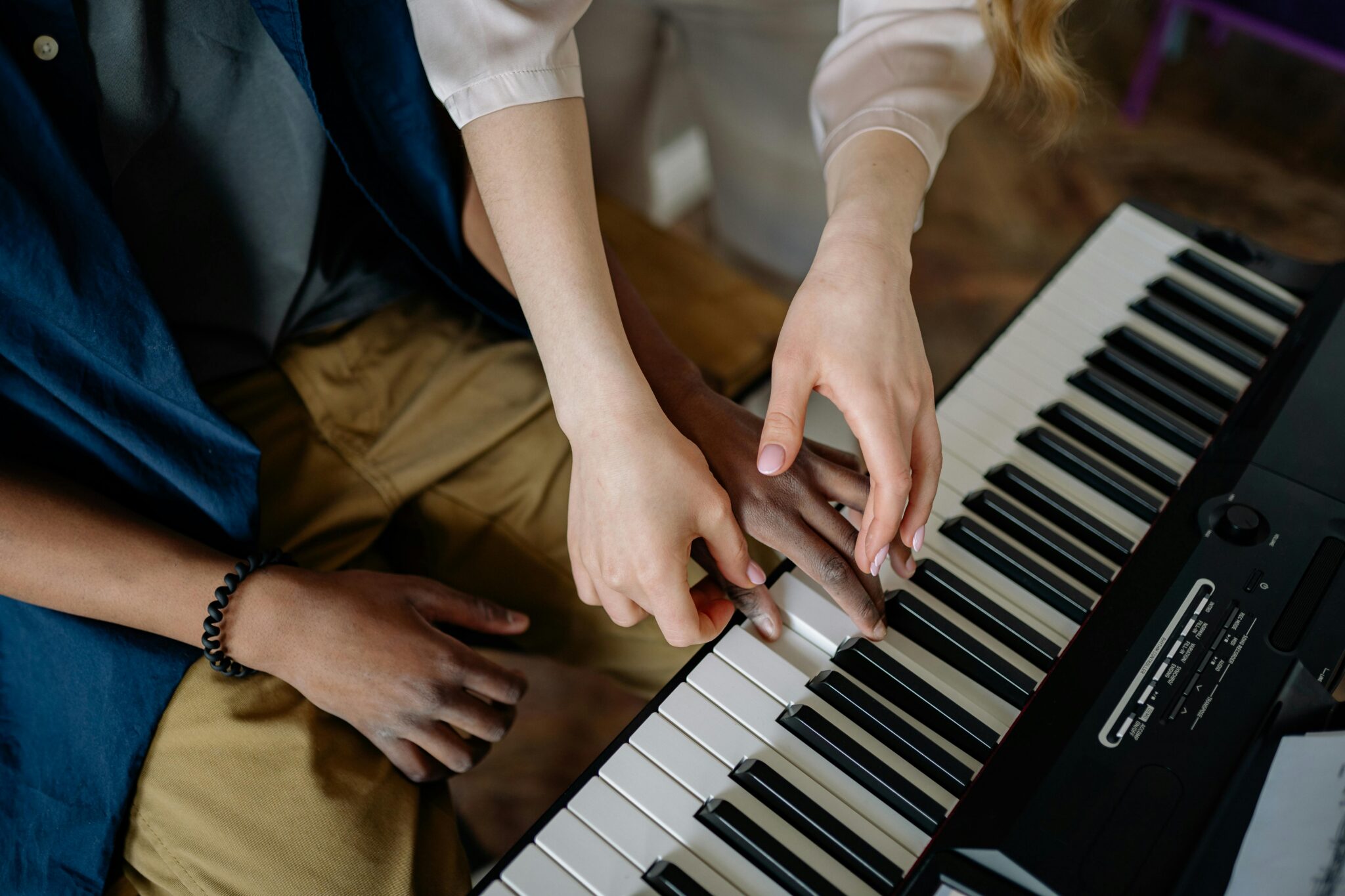
Proper posture and hand position prevent injury and enable fluid playing. Sit with your back straight, feet flat on the floor, and forearms parallel to the keyboard. Your fingers should curve naturally, as if holding a small ball, with fingertips making contact with the keys rather than flat fingers.
Note reading begins with understanding the grand staff—two sets of five lines that represent different pitch ranges. The treble clef (right hand) and bass clef (left hand) work together to show you which notes to play. Start by memorizing middle C and gradually expand your recognition to surrounding notes through daily practice.
Rhythm fundamentals prove just as important as note identification. Understanding whole notes, half notes, quarter notes, and their corresponding rests teaches you not just which notes to play, but when to play them and for how long. Apps with built-in metronomes help develop consistent timing from the very beginning.
Developing Proper Technique Through Online Instruction
Technique development separates casual players from accomplished pianists. Without proper guidance, self-taught musicians often develop bad habits that limit progress and potentially cause physical strain. Quality online programs address these concerns through detailed video instruction and real-time feedback mechanisms.
Finger independence exercises strengthen each digit individually, allowing you to play complex passages where different fingers move at different speeds or dynamics. Hanon exercises, scales, and arpeggios might seem tedious, but they build the muscle memory and coordination required for advanced repertoire.
Dynamics and expression transform mechanical note-playing into genuine music-making. Learning to control volume through touch, understanding when to play loudly or softly, and mastering crescendos and decrescendos brings emotional depth to your performances. Many apps include lessons specifically focused on these expressive elements.
Pedaling technique adds richness and sustain to your playing. The sustain pedal connects notes smoothly, creating flowing phrases impossible to achieve with fingers alone. Online tutorials demonstrate proper foot placement and timing, teaching you when to press, release, and change the pedal for optimal sound quality.
Creating an Effective Practice Routine That Delivers Results ⏰
Consistent practice matters more than marathon sessions. A well-structured 30-minute daily practice yields better results than sporadic three-hour weekend sessions. Online learning thrives when paired with disciplined, regular engagement with your instrument.
Begin each session with a brief warm-up—five minutes of scales or simple exercises that prepare your fingers and mind for focused work. This ritual signals your brain that it’s time to concentrate and helps prevent injury by gradually increasing blood flow to your hands.
Divide your practice time strategically across different activities. Spend 40% on new material, 40% reviewing and perfecting previous lessons, and 20% playing pieces you already know well. This balance ensures steady progress while maintaining the enjoyment that comes from playing familiar songs confidently.
Set specific, measurable goals for each practice session rather than simply “practicing piano.” Goals like “master the first eight measures of this piece” or “play this scale at 80 BPM without mistakes” provide clear targets and satisfying accomplishments that fuel motivation.
Track your progress through practice journals or app-based logging features. Recording which pieces you practiced, which sections need work, and breakthrough moments creates accountability and allows you to see tangible improvement over weeks and months.
Overcoming Common Challenges in Self-Directed Piano Learning
Every pianist encounters obstacles along their journey, but online learners face unique challenges without an in-person instructor to provide immediate correction and encouragement. Recognizing these hurdles and implementing solutions keeps your progress steady.
Motivation fluctuations affect even the most dedicated students. Combat this by varying your practice material—mix technical exercises with fun song arrangements that remind you why you started learning. Many apps incorporate popular music that makes practice feel less like work and more like recreation.
Technical confusion arises when video demonstrations don’t quite show the angle you need or when written explanations remain unclear. Don’t hesitate to consult multiple resources for the same concept. Different instructors explain ideas differently, and the explanation that clicks might come from a YouTube tutorial, a blog post, or an app’s alternative lesson on the same topic.
Plateaus test every musician’s patience—periods where progress seems to stall despite consistent effort. These phases often precede significant breakthroughs as your brain consolidates information. During plateaus, focus on refining pieces you already know rather than constantly pushing into new territory. Polish and perfection develop important listening and self-correction skills.
Isolation can diminish enthusiasm for self-taught musicians. Counter this by joining online communities, forums, or social media groups dedicated to piano learning. Sharing recordings, asking questions, and celebrating milestones with others on similar journeys provides the social connection that traditional studio environments naturally offer.
Integrating Music Theory to Accelerate Your Progress 📚
While you can learn to play piano mechanically by following visual cues and memorizing finger patterns, understanding music theory transforms you from someone who plays notes into a genuine musician who understands the language of music.
Chord theory opens enormous possibilities for creativity and improvisation. Learning how major, minor, diminished, and augmented chords are constructed allows you to play songs by ear, create your own arrangements, and understand why certain note combinations sound pleasing while others create tension.
Scale knowledge extends beyond finger exercises into understanding the framework that underlies virtually all Western music. Major scales create bright, happy sounds, while minor scales evoke melancholy or drama. Recognizing scale patterns in pieces you’re learning makes memorization easier and reveals the logic behind seemingly complex passages.
Key signatures eliminate guesswork about which black keys to play throughout a piece. Rather than remembering individual sharps or flats, understanding key signatures lets you see the overall tonal center and anticipate which notes will naturally occur in the music.
Harmonic progression knowledge—how chords typically move from one to another—enables you to predict what’s coming next in a piece. This anticipation makes sight-reading easier and helps you recover quickly if you make a mistake during performance.
Expanding Your Repertoire Across Multiple Genres 🎼
Versatility distinguishes well-rounded pianists from those limited to a single musical style. Online learning platforms typically offer diverse genre options, allowing you to explore musical territories that traditional teachers might not emphasize based on their personal specializations.
Classical music builds exceptional technical skills and musical interpretation abilities. Pieces by composers like Bach, Mozart, and Chopin challenge your reading, coordination, and expressive playing. Even if classical isn’t your favorite listening genre, incorporating it into your practice develops abilities that transfer to all other styles.
Jazz and blues introduce improvisation, syncopation, and chord voicings rarely encountered in classical training. These genres teach you to play “off the beat,” creating rhythmic interest and developing the flexibility to embellish and personalize rather than simply recreating exactly what’s written.
Pop and rock arrangements make practice enjoyable and impressive to friends and family. Playing recognizable contemporary songs provides motivation during challenging learning periods and demonstrates practical application of your developing skills.
Film scores and video game music combine technical challenges with emotionally engaging melodies. These arrangements often feature dramatic dynamics and memorable themes that make practice sessions feel like creative expression rather than obligatory exercises.
Measuring Progress and Setting Milestone Goals 🎯
Without a teacher assigning grades or marking advancement through formal levels, self-directed learners must create their own progress metrics. Establishing clear milestones provides motivation and helps you recognize improvement that might otherwise go unnoticed.
Recording yourself regularly creates undeniable evidence of progress. A piece that feels clumsy and difficult today sounds remarkably improved when you compare recordings made weeks or months apart. These recordings also help identify specific areas needing attention that you might not notice while focused on playing.
Performance opportunities, even informal ones, test your abilities under pressure and provide concrete goals to work toward. Schedule mini-recitals for family members, record videos for social media, or participate in online piano challenges that encourage you to polish pieces to performance-ready standards.
Complexity progression in the pieces you tackle indicates genuine advancement. Moving from simple arrangements with single-note melodies to pieces featuring chord progressions, multiple simultaneous melodies, and sophisticated rhythms demonstrates expanding capabilities.
Speed development with metronome work provides quantifiable improvement. If you can play a piece at 60 BPM in January and reach 100 BPM by March, you’ve made measurable progress regardless of subjective feelings about your playing quality.
Leveraging Technology to Enhance Your Learning Experience 💻
Modern technology offers tools beyond basic instructional apps that can significantly enhance your learning efficiency and enjoyment. Exploring these resources creates a richer, more comprehensive educational experience.
MIDI connectivity allows your digital piano or keyboard to interact with computer software, enabling features like note visualization, automatic scoring, and even game-like learning applications. Programs like Synthesia display falling notes that show you exactly when and which keys to press, similar to rhythm games but with real piano learning outcomes.
Slow-down software helps you tackle difficult passages by reducing tempo without changing pitch. Learning complex runs or rapid passages becomes manageable when you can practice them at half speed before gradually increasing to performance tempo.
Sheet music apps and websites provide instant access to thousands of scores, often with adjustable difficulty levels for the same piece. This accessibility means you’re never limited by the physical music books available at your local store.
Online metronomes and tuning apps ensure your timing develops accurately and, if you’re using an acoustic piano, that your instrument stays in proper tune for ear training purposes.
Transforming Practice Into Musical Expression and Joy 🌟
Technical proficiency represents only part of piano mastery—the ultimate goal involves expressing emotion, telling stories, and experiencing the profound joy that music-making brings. As your skills develop, consciously transition from mechanical playing to artistic interpretation.
Listen actively to professional recordings of pieces you’re learning. Notice how artists shape phrases, emphasize certain notes, and use silence as effectively as sound. These listening sessions inform your interpretation and inspire new approaches to familiar passages.
Experiment with personalization once you’ve mastered the basic notes of a piece. Try different tempos, dynamic contrasts, or even chord substitutions in contemporary pieces. This creative freedom transforms you from a note-reproducer into a genuine artist making musical choices.
Connect emotionally with the music you play. Understand the context in which pieces were written, imagine the stories or scenes they might represent, and let those mental images influence your performance. Music played with emotional engagement resonates far more powerfully than technically perfect but sterile execution.
Share your music generously, even when you feel you haven’t achieved perfection. Music exists to be heard and shared. Whether performing for family, posting recordings online, or simply playing for your own enjoyment, let the act of making music bring lightness and satisfaction to your life.
Learning piano online offers unprecedented opportunities for musical growth, combining flexibility, affordability, and comprehensive instruction that adapts to your unique needs and pace. The journey from complete beginner to confident pianist happens one practice session at a time, with each small improvement building toward significant accomplishment. Embrace the process, celebrate your progress, and remember that every accomplished pianist once sat exactly where you are now—at the beginning, filled with potential and the exciting promise of musical discovery ahead. Your musical voice awaits expression through the keys beneath your fingers. 🎹✨
