
Anúncios
Training your pet is one of the most rewarding experiences for any animal owner, building trust, communication, and a lasting bond that enhances daily life together.


Whether you’ve just welcomed a playful puppy into your home or adopted an older companion with established habits, understanding how to effectively train your pet transforms your relationship from chaotic to harmonious. Training isn’t just about teaching commands—it’s about creating a language between you and your furry friend that fosters mutual respect and understanding.
Anúncios
The journey of pet training opens doors to safer outdoor adventures, stress-free vet visits, and peaceful coexistence with guests and other animals. With patience, consistency, and the right techniques, any pet owner can become a confident trainer, regardless of previous experience or their pet’s age or temperament. 🐾
Understanding Your Pet’s Learning Psychology
Before diving into specific training techniques, it’s essential to grasp how animals process information and form behavioral patterns. Pets, particularly dogs and cats, learn primarily through association and consequence. When a behavior results in something pleasant, they’re more likely to repeat it. Conversely, behaviors that lead to neutral or unpleasant outcomes tend to diminish over time.
Anúncios
This fundamental principle, known as operant conditioning, forms the backbone of modern, humane pet training. Unlike outdated punishment-based methods, positive reinforcement creates eager learners who view training sessions as enjoyable bonding time rather than stressful ordeals.
Every pet has a unique personality shaped by genetics, early experiences, and ongoing environmental factors. A confident retriever puppy will respond differently to training than a timid rescue cat. Recognizing these individual differences allows you to tailor your approach, setting realistic expectations and celebrating incremental progress rather than demanding perfection.
Essential Supplies for Successful Training Sessions
Gathering the right tools before beginning your training journey sets you up for success. While you don’t need expensive equipment, certain items make the process smoother and more effective.
High-value treats are your most powerful training tool. Choose small, soft morsels that your pet can consume quickly without losing focus. The treat should be something extraordinary—reserved exclusively for training—not their regular kibble. Chicken, cheese, or specialized training treats work wonderfully for most dogs.
A proper collar or harness ensures your pet’s comfort and safety during leash training. For dogs prone to pulling, a front-clip harness provides better control without causing discomfort. Cats being harness-trained need lightweight, escape-proof designs specifically made for felines.
Clickers offer precise communication timing, marking the exact moment your pet performs the desired behavior. This tiny device bridges the gap between action and reward, accelerating the learning process significantly.
Starting with Foundation Commands 🎯
Every well-trained pet needs a solid foundation of basic commands that ensure safety and facilitate daily interactions. These fundamental skills form the building blocks for more advanced training later.
The “sit” command typically comes first because it’s naturally easy for most pets and provides immediate practical value. To teach it, hold a treat close to your pet’s nose, then slowly move your hand upward and backward. As their head follows the treat, their bottom naturally lowers. The moment it touches the ground, say “sit,” click (if using a clicker), and reward immediately.
Practice this sequence multiple times daily in short sessions—five to ten minutes maximum. Young animals have limited attention spans, and ending on a positive note keeps them enthusiastic about future training.
“Come” or recall training could literally save your pet’s life someday. Begin in a distraction-free environment indoors. Say your pet’s name followed by “come” in an upbeat, welcoming tone. When they approach, reward generously with treats and praise. Gradually increase distance and introduce mild distractions, always ensuring success before advancing difficulty.
Never call your pet to come for something unpleasant like nail trimming or medication. This creates negative associations that undermine your recall training. Instead, go to them for less enjoyable activities.
Timing and Consistency: The Twin Pillars of Training
The difference between successful and frustrating training often boils down to two critical factors: timing and consistency. Rewards must occur within one to two seconds of the desired behavior for your pet to make the connection. This is where clickers excel, providing an instant marker that says “yes, that exact thing you just did!”
Consistency means everyone in your household uses the same commands, hand signals, and reward systems. If you say “down” for lying down but your partner says “lie down,” your pet receives mixed messages that slow learning. Family meetings to align on training vocabulary and techniques pay tremendous dividends.

Schedule training sessions at the same times daily when possible. This routine helps your pet anticipate and prepare mentally for learning mode. Many trainers find pre-meal times ideal because pets are naturally more food-motivated when hungry.
Addressing Common Behavioral Challenges
Even with perfect technique, behavioral issues will emerge. Jumping on guests, excessive barking, leash pulling, and destructive chewing top the list of common complaints from pet owners.
Jumping typically stems from excitement and a desire for attention. The solution involves removing the reward (your attention) when jumping occurs. Turn away, cross your arms, and ignore your pet completely until all four paws are on the ground. The instant they’re calm, reward with attention and treats. Consistency is crucial—one person allowing jumping undermines everyone else’s efforts.
Excessive vocalization requires identifying the underlying cause. Boredom, anxiety, territorial behavior, and attention-seeking each demand different solutions. A dog barking from boredom needs more physical exercise and mental stimulation. An anxious pet might benefit from desensitization training and possibly veterinary consultation about anxiety management.
Leash pulling transforms pleasant walks into arm-wrenching ordeals. The solution is counterintuitive: stop moving forward whenever tension appears on the leash. Your pet learns that pulling gets them nowhere, while a loose leash allows continued exploration. This requires patience initially but produces dramatic long-term results.
Positive Reinforcement vs. Punishment-Based Methods
The debate between training philosophies has largely settled in favor of positive reinforcement among professional trainers and animal behaviorists. Science consistently demonstrates that reward-based training produces more reliable, longer-lasting results while strengthening the human-animal bond.
Punishment-based methods can suppress unwanted behaviors temporarily but often create fearful, anxious pets who perform out of fear rather than understanding. These approaches risk damaging trust and may trigger aggression or other behavioral problems.
Positive reinforcement doesn’t mean permissiveness or lack of boundaries. It means rewarding desired behaviors rather than punishing mistakes. When your pet makes an error, simply withhold the reward and create another opportunity for success. This approach builds confidence and enthusiasm for learning.
In situations requiring behavior interruption, use neutral interrupters like “uh-oh” or a brief sound that redirects attention without frightening your pet. Follow immediately with guidance toward the correct behavior and reward when they comply.
Age-Specific Training Considerations 🐶
Puppies and kittens are delightful blank slates, but their short attention spans and developing bladder control require adjusted expectations. Training sessions should last only five minutes maximum, multiple times daily. Socialization—positive exposure to various people, animals, sounds, and environments—is equally important as obedience training during this critical developmental window.
Adolescent pets, typically between six months and two years, test boundaries like human teenagers. Previously mastered commands may seem forgotten as hormones surge and independence grows. Patience and consistency during this challenging phase prevent long-term behavioral issues. This is not the time to reduce training frequency or relax standards.
Adult and senior pets absolutely can learn new behaviors, despite the old adage. They may require slightly more repetitions to form new neural pathways, but their improved focus often balances this out. Older pets with physical limitations may need modified exercises, and positive reinforcement becomes even more critical as they may have previous negative training experiences to overcome.
Advanced Training and Mental Stimulation
Once foundation commands are solid, advanced training provides mental exercise that tires pets more effectively than physical activity alone. Trick training, scent work, agility courses, and puzzle toys challenge your pet’s problem-solving abilities while deepening your communication.
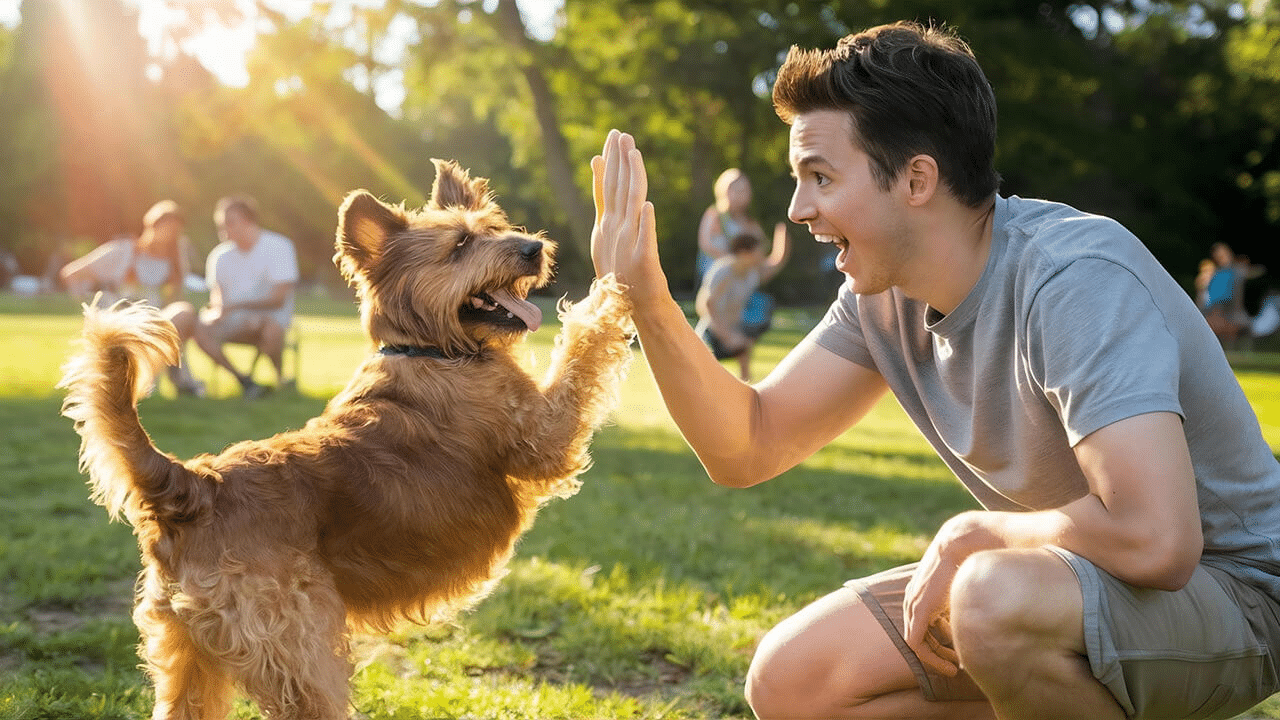
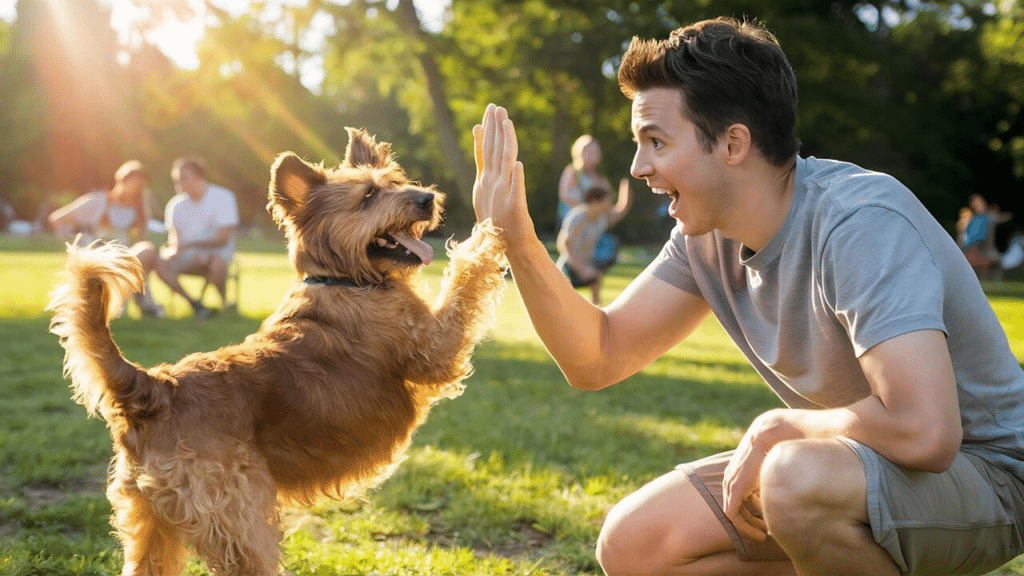
Teaching tricks like “shake,” “roll over,” or “play dead” isn’t frivolous—these activities strengthen the training foundation and build your pet’s confidence in learning new tasks. The process also sharpens your timing and observation skills as a trainer.
Scent work taps into natural instincts, particularly for dogs whose noses contain up to 300 million olfactory receptors. Hiding treats around your home and encouraging your pet to find them provides incredible mental stimulation. This can evolve into formal nose work training, which many pets find deeply satisfying.
Interactive puzzle toys that dispense treats when manipulated correctly offer independent mental exercise. Rotate different puzzles to maintain novelty and gradually increase difficulty as your pet masters easier levels.
Creating a Training Schedule That Works
Consistent practice matters more than marathon sessions. Five minutes of focused training three times daily outperforms one exhausting thirty-minute session. Short sessions maintain your pet’s enthusiasm and prevent mental fatigue that leads to frustration.
A realistic weekly training schedule might look like this:
- Morning: 5-minute foundation command review before breakfast
- Midday: 10-minute walk with leash training practice
- Evening: 5-minute new skill introduction or trick training
- Before bed: 5-minute calm behaviors and settling exercises
Build training into daily routines rather than treating it as a separate, formal activity. Ask for a “sit” before meals, door openings, or leash attachment. These micro-training moments accumulate significant practice without requiring dedicated time blocks.
When to Seek Professional Help 👨🏫
Sometimes professional guidance accelerates progress or addresses issues beyond typical pet owner expertise. Aggression toward people or other animals, severe anxiety, or obsessive behaviors warrant consultation with a certified professional dog trainer (CPDT) or veterinary behaviorist.
Group training classes offer socialization opportunities alongside instruction. Your pet learns to focus despite distractions while you gain hands-on coaching. These classes also connect you with other pet owners facing similar challenges, creating supportive communities.
Private training sessions provide customized attention for specific issues or learning styles. A professional can observe subtle communication signals you might miss and adjust techniques to better suit your pet’s personality.
Don’t view seeking help as failure. Professional trainers bring years of experience across hundreds of animals, offering perspectives and solutions that wouldn’t occur to even dedicated owners.
Celebrating Progress and Maintaining Skills
Training is never truly “finished.” Skills require ongoing practice to remain sharp, and new situations will always emerge that test your pet’s training. This isn’t discouraging—it’s an opportunity for lifelong bonding and communication refinement.
Celebrate small victories along the journey. The first successful “stay” while you step three feet away deserves the same enthusiasm as eventually maintaining that stay across a room. Your genuine excitement reinforces your pet’s desire to please and try new things.
Periodically return to foundation skills even after introducing advanced training. This prevents skill degradation and provides confidence-building easy wins during challenging new learning phases.
Keep detailed notes about what works and what doesn’t for your specific pet. These observations become invaluable references when facing new challenges or helping other pet owners starting their training journeys.
The Lifelong Benefits of a Well-Trained Pet 🌟
The investment in training pays dividends throughout your pet’s life. Emergency vet visits become manageable when your pet responds reliably to “stay” and accepts handling calmly. Travel opens up when your companion can settle quietly in cars or rest on command in unfamiliar places.
Social opportunities expand dramatically with a well-trained pet. Dog-friendly restaurants, hiking trails, and visits to friends’ homes shift from stressful to enjoyable. Your pet becomes a welcome addition rather than a liability that requires isolation.
Perhaps most significantly, training strengthens the emotional bond between you and your pet. The hours spent teaching, learning, and communicating build mutual understanding and trust that transcends the specific commands taught. Your pet looks to you for guidance, and you develop the ability to read their subtle signals and needs.
This partnership, built on positive experiences and clear communication, transforms pet ownership from merely cohabitating with an animal to sharing life with a responsive, engaged companion who enriches every day.
Adapting Training for Different Pet Species
While this article focuses primarily on dogs due to their trainability and the volume of established training methods, cats, rabbits, birds, and even fish can learn through positive reinforcement principles.
Cat training requires extra patience and intrinsic motivation since felines weren’t selectively bred for cooperation with humans like dogs. Short sessions, high-value treats, and acceptance of their independent nature produce better results than attempting to force canine training methods onto cats.
Rabbits respond beautifully to clicker training and can learn to come when called, use litter boxes reliably, and perform entertaining tricks. Their food motivation and intelligence make them surprisingly capable students.
Birds, particularly parrots and corvids, possess remarkable cognitive abilities and thrive on training mental stimulation. Target training forms the foundation for most avian training, teaching birds to touch a stick or your finger on command.
Regardless of species, the principles remain constant: clear communication, immediate rewards, consistency, and patience. Adjust your expectations to match your pet’s natural abilities and instincts rather than fighting against their inherent nature.
Training your pet represents one of the most valuable investments of time and energy you’ll make as an animal guardian. The process builds communication channels, prevents behavioral problems, ensures safety, and creates countless moments of connection and joy. Whether you’re teaching a puppy their first “sit” or helping an older rescue dog overcome fears, every training session strengthens the remarkable bond between humans and animals that has enriched both species for thousands of years.
